Primary sources are extremely helpful to art historians trying to reconstruct a complete image of a historic time. Personal letters and diaries, as well as articles written by art critics are some of the few resources historians have that document people’s authentic reactions, thoughts, and beliefs to the world around them. Although they only communicate one voice at a time, primary sources have the ability to reveal larger movements.
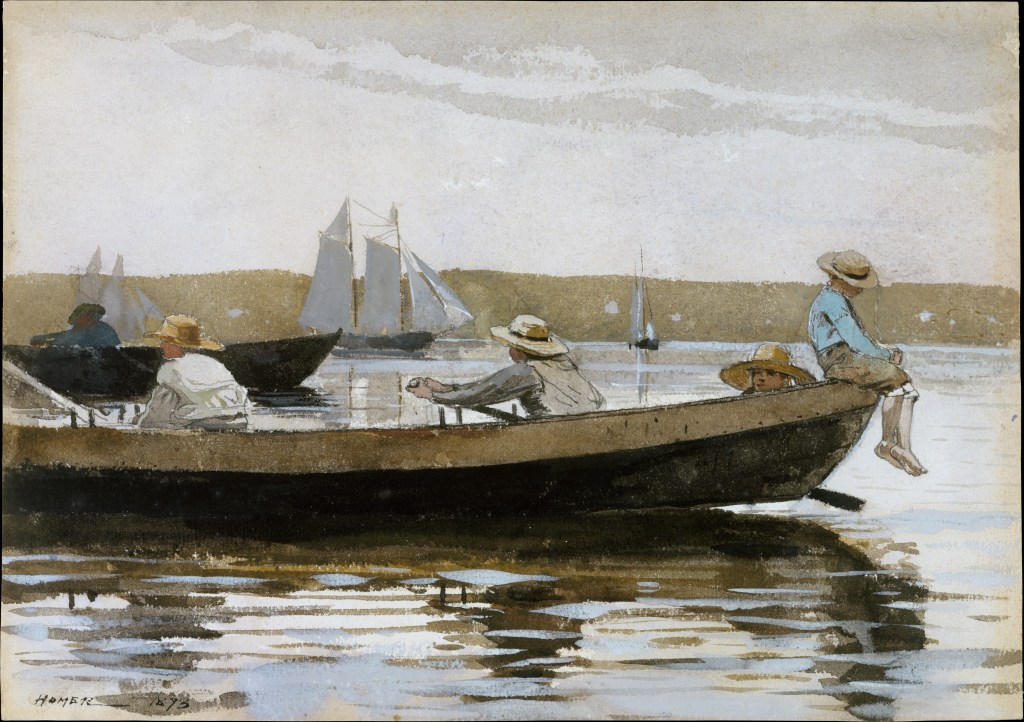
Essentially, primary art history sources can convey how people used art to shape their world. For instance, reading documents that date back to the late 19th century, gives readers an immediate impression of the dialogue and thought process that was occuring in post Civil-War America. Just looking at the reactions excited by one artist’s work, Winslow Homer’s, readers can get a broad sense of what art critics expected of American art in this period. Writing for Century Illustrated Magazine in 1883, Mariana Griswold Van Rensseleaer states in her article “An American Artist in England” that Homer’s paintings are “a little primitive, a little rustic” (Burns/Davis 582) careful not to label them as amateurish. She further notes they are “strong, characteristic, personal, though unpolished, diction of a provincial poet” (Burns/Davis 582) thus distinguishing Winslow’s style from England’s tediously detailed realism paintings. Critics from this period are marking his style as American, not just because he paints American subjects, but because his work is individualistic and thus distinct from international styles. Homer’s paintings purposely lack polish so many of the brush strokes are visible, which is due in part to his experimental use of watercolor, a medium not commonly used. Readers will find that critics are grappling with a new definition of realism, one that strays away from any specific art academy. Reading through a variety of art critics’ published opinions reveals that critics were looking for painters who were interested in illustrating their own personal view of the world.
Similarly, primary sources can assist readers in noticing things in paintings that a purely modern perspective would not have provided. Overall, sources reveal things to be complex, even though they are seemingly simple. Upon first viewing, William Sidney Mount’s portraits of African Americans may not immediately reveal how contradictory and hard to read his pictures really are. In the period before the Civil War, white artists had fabricated a “theory respecting the distinctive features of Negro physiognomy” (Frederick Douglas, “A Tribute for the Negro,” 1849, Burns/Davis 333) which included exaggerated sized heads, and silly features that caricatured all African Americans as comical figures. Mount’s Right and Left seemingly goes beyond being a caricature by depicting an African American fiddler with individualistic features: lighter skin tone, lengthy hair, and distinguishable face from Mount’s other musician paintings. However, during a correspondence with William Schaus, a commissioner, he writes “A Negro is as good as a White man as long as he behaves himself” (Burns/Davis 332) which gives readers a sense that African Americans were expected to play a role. This influences readers to remember the popularity of minstrel shows which characterized African Americans as entertainers in a music and comedic sense. Primary sources make it clear that Mount’s paintings occupy a spot that is just between respectful and stereotypical.
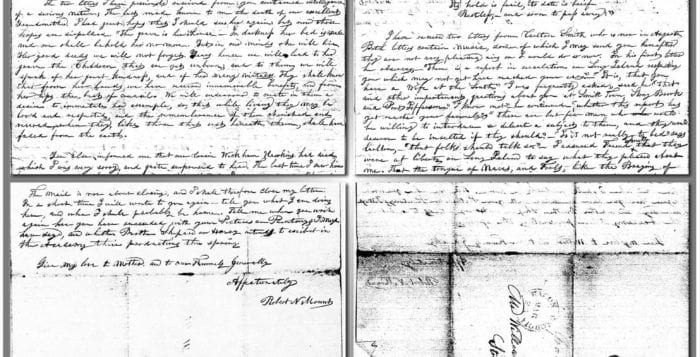
Viewing primary sources informs readers of how art criticism was being practiced in a particular moment. These insights even help art historians and viewers learn about movements that are not being discussed by current art historians.
* all primary sources I used for this essay were reproduced in the book listed below. Extremely helpful!
Burns, Sarah, & Davis, John. (2009). American Art to 1900: A Documentary History. Berkeley: University of California Press.
 Wayne's Wonder-Room