

As an Indiana University transplant working at Purdue University, I know pretty distinctly that all universities have their own “culture”. It’s extracurricular, but universities spend an amazing amount of resources on building culture, whether it’s hiring a new football coach, restoring a historic building, or planting more trees on campus. Culture is the connective tissue of the entire study body and its alumni. It influences why someone chooses to enroll at a specific school, their level of involvement as a student, and the degree they give back as alumni.
As an archivist working at the Purdue University Archives and Special Collections, I have had two opportunities this fall semester to share with students and alumni the history of several of Purdue University’s cultural cornerstones – and had a lot of fun doing so!
On September 30th, I guided David Atkinson’s history honors class on a history tour around campus. The previous class session, I hosted the class at the Archives and Special Collections – giving them a rundown of how to use the archives, so the tour was an opportunity to demonstrate how campus itself could be used in their research. The maintenance and creation of green spaces on campus was a large talking point. How appealing the physical campus is plays a role in overall satisfaction with being a student at a particular school. Students learned that having a pretty campus is never a given. Our spaces are shaped by people, who have motivations and agendas – campuses are not designed without some kind of vision or reason.
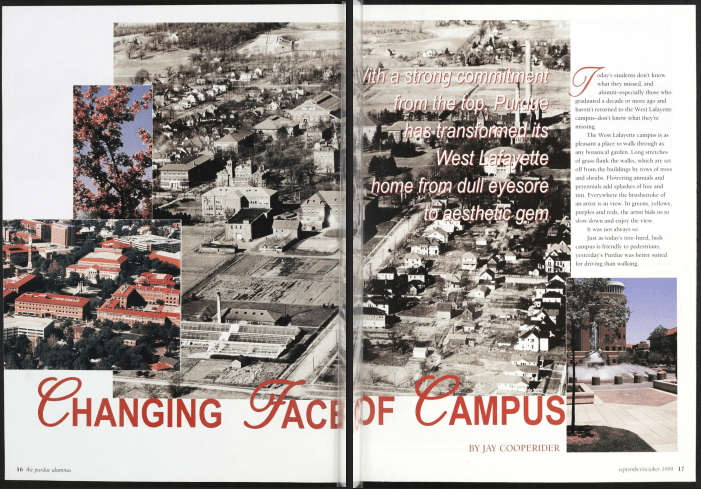
The students showed some surprise at how much the campus has changed in a relatively short amount of time. When asked about their opinion of the aesthetic of today’s campus, they had positive things to say. I mentioned that campus aesthetic plays a role in admissions and that “top 10 prettiest campuses” lists are influential. Many of the students had opinions about whether IU Bloomington or Purdue West Lafayette had a prettier campus.
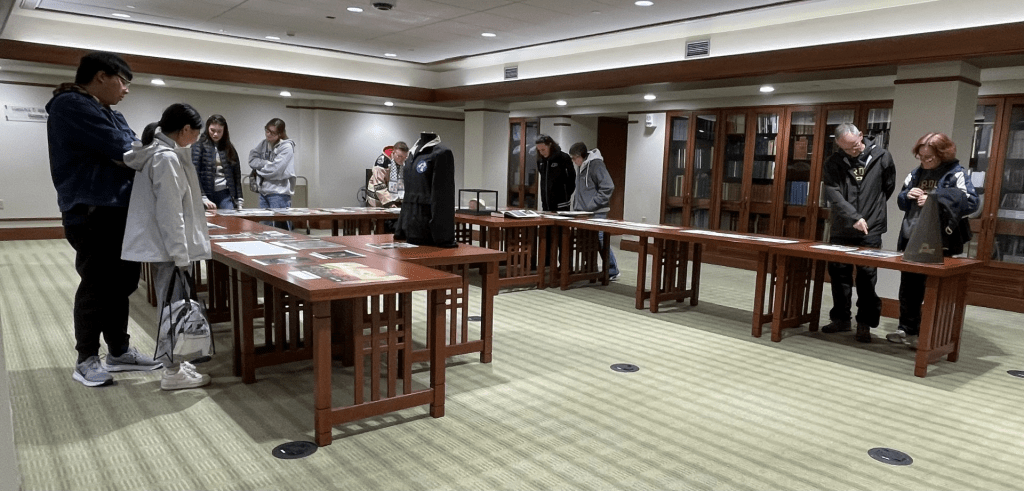
On October 24th and 25th, I had the opportunity to design and curate a pop-up exhibit on the history of Purdue University’s Homecoming entitled Over a Century of Coming Home: Homecoming at the Archives. A major theme was exploring how and why traditions get started at schools. Spread out across our reading room were photographs, artifacts, newspaper articles, and manuscripts related to the social history of electing homecoming royalty, celebrating major football homecoming victories, and investigating when were the earliest homecoming gatherings. My favorite section was exploring the long lost tradition of creating lawn decorations for homecoming, which is a reminder that traditions can go away if they’re not actively preserved by people. The parade, which Purdue students and alumni may find as a surprise, was not a fixture at Purdue Homecoming until the early 2000s when Boiler Night Train was formed. That serves as a reminder that it’s never too late to begin new school traditions. In fact, traditions, old and new, are always in flux.
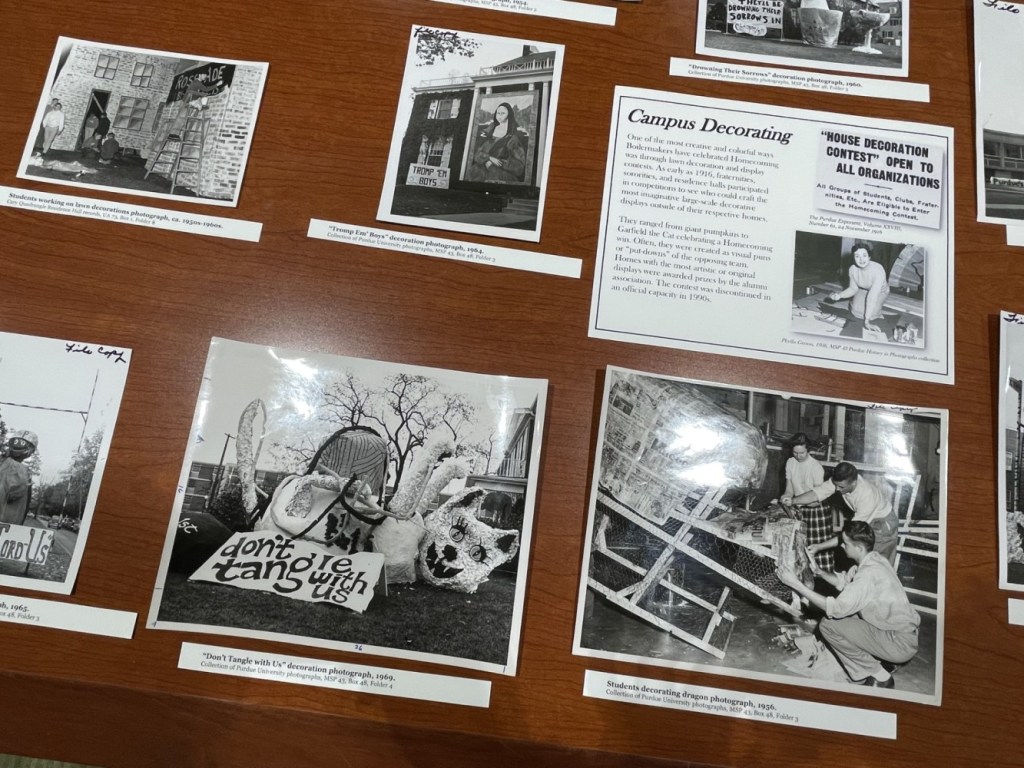
I had a lot of fun sharing how you can use the archives to explore why Purdue feels like “Purdue”. I often take it for granted how a school’s culture can impact your overall experience as a student and employee – schools spend a lot of time and money creating a distinct culture. You only have to move an hour and a half north from Bloomington to find out.
 Wayne's Wonder-Room