
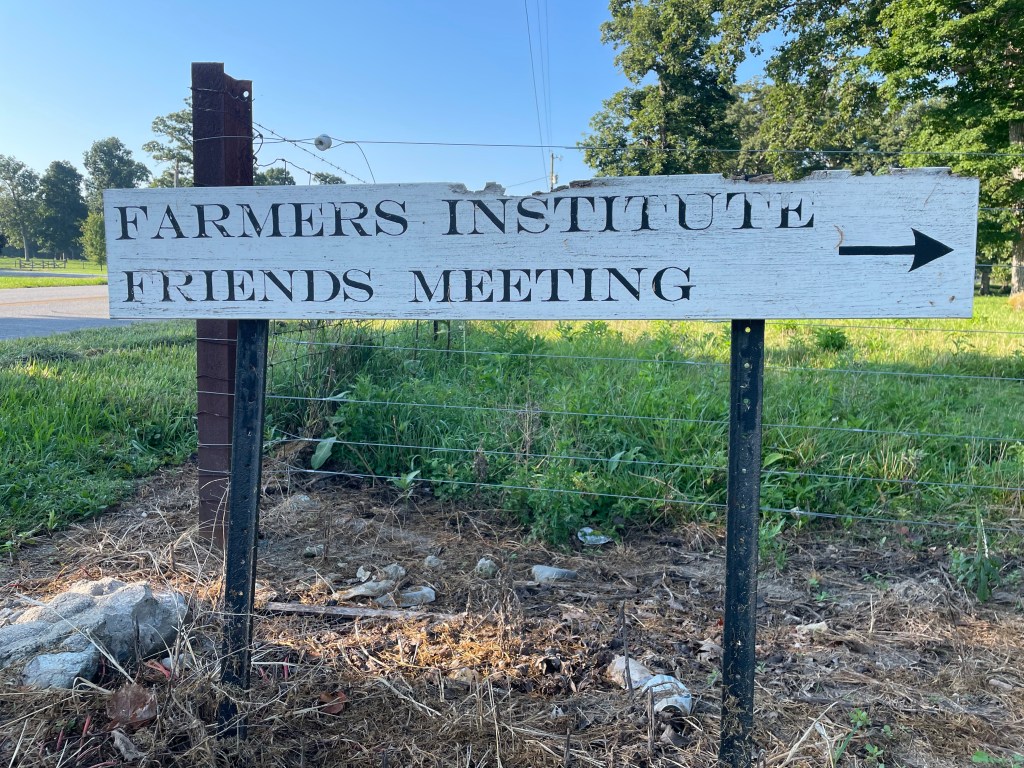
Drive down Sleeper Road in Tippecanoe County and you’ll be treated to an idyllic landscape of farmland, dotted with historic churches, barns, and houses, many of which are tied to a rich history of Quaker settlement. Like the Levi and Catharine Coffin State Historic Site, the Buddell Sleeper House, located at the intersection of West 700 South and South 550 West, was also a Quaker safe haven for escaped enslaved peoples before and during the Civil War. But unlike the Coffin Historic Site, it remains a private residence. Those previously mentioned historic churches and barns are still in use by the community too. The Farmer’s Institute, built in 1850 as the county’s first higher education school, operates as a Friend’s Meeting House, and yes, those barns are still used as originally intended.
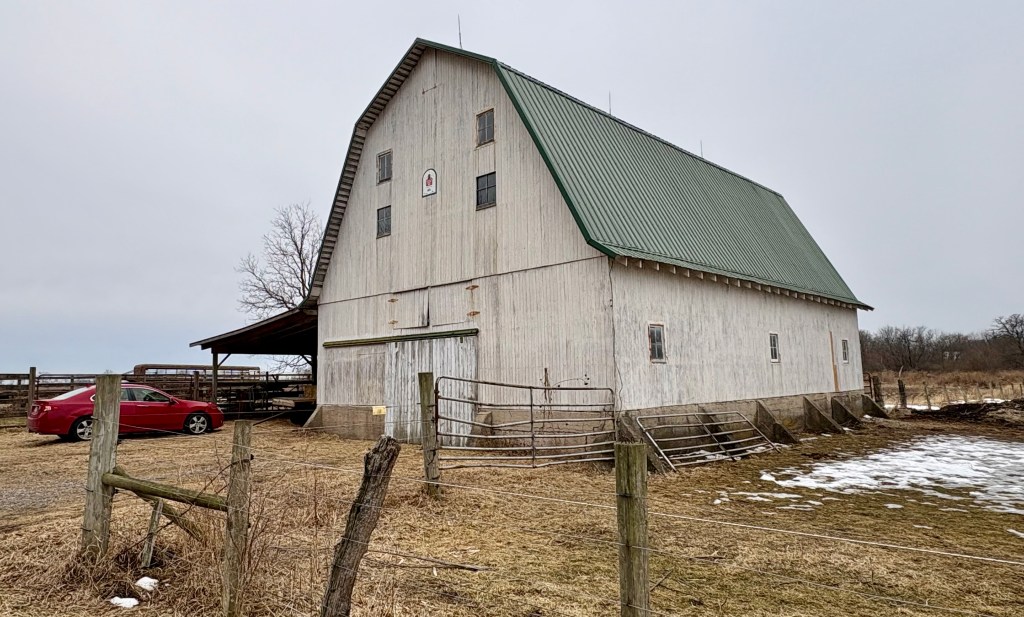
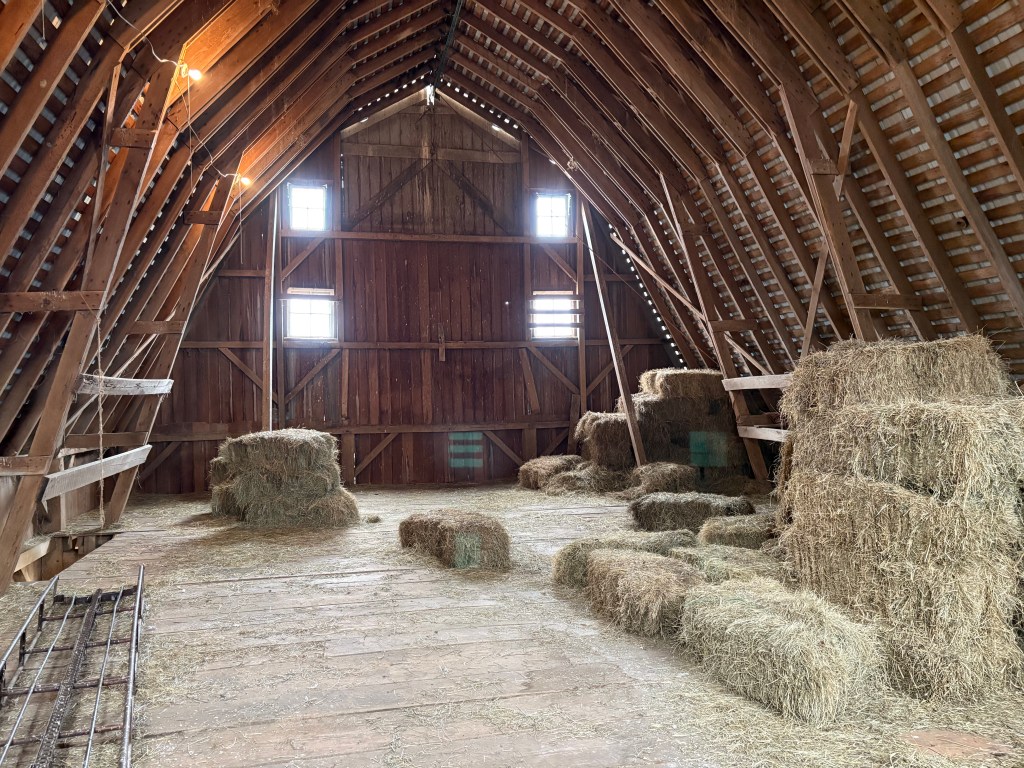
David, a local resident, was kind enough to share how he acquired one of these historic barns and what it means to him. At the intersection of W 660 S and S 475 W a handsome transverse, gambrel roofed barn sits on a concrete foundation. The barn was built in 1938 by J.H. Bone, an agriculture professor at the University of Oklahoma who moved to Tippecanoe County around 1898 to become a farmer. David eventually acquired the barn and continues to use it to house livestock and hay. The barn holds significant meaning, as it represents a tangible connection to the past and to a way of life. David shared that J.H. Bone harvested the interior wood for the barn after a tornado took out a grove of white oak trees, a high quality lumber. There’s resourcefulness in a lot of historic buildings, which are often built from local materials. In 2016, he submitted the barn to the Bicentennial Barns of Indiana project, which documented a list of 200 historic barns across the state. David’s barn was awarded a plaque.
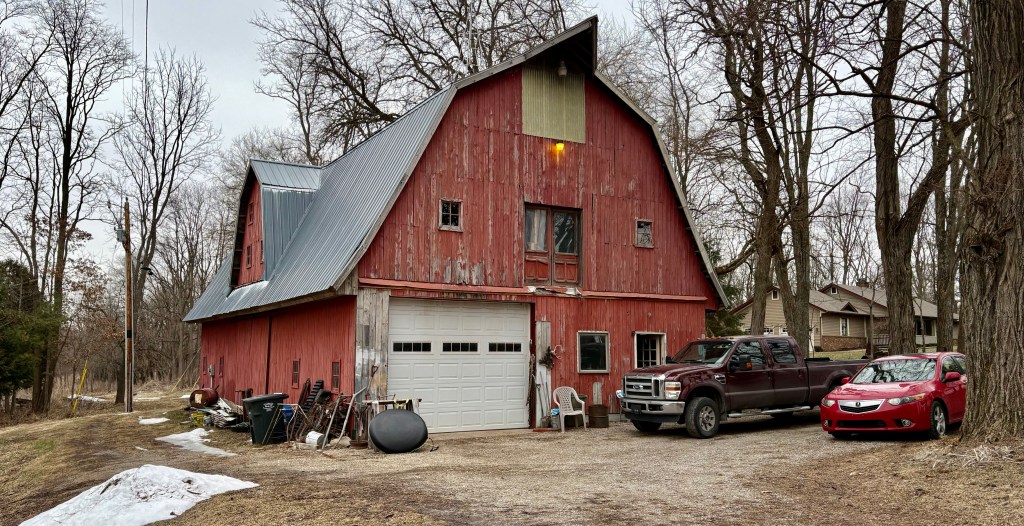
In circa 1980, David began building his own barn and fashioned it after the J.H. Bone barn. David’s barn has a gambrel roof, is transverse style, and is roughly the same size, but painted red. I like to compare his barn to the Ise Shrine that is rebuilt every 20 years in Japan. The methodology in which his barn was constructed, in particular knowing what trees to use, was duplicated. David employed the same resourcefulness too, he took drives to Camp Atterbury to collect lumber from old World War II warehouses and used recycled telephone poles for the beams. While a steel barn would have served the same purpose, a wooden barn is a meaningful way to feel connected to the past. David did put a basketball court in his hayloft though, J.H. Bone never had one of those as far as I know.
David’s two barns reminded me that preservation is always active and never passive. It occurs through action. I’ve typically thought of preservation as something you take care of. David’s barn reminded me that you can engage in historic preservation through making. While most may make old fashioned quilts quilts, make family recipes that have been passed down, or play folk music, David built a barn.
 Wayne's Wonder-Room